Spades Strategy: Bid Right, Play as a Team
Spades is won by the team that bids accurately and plays together. Here are the habits that matter most.
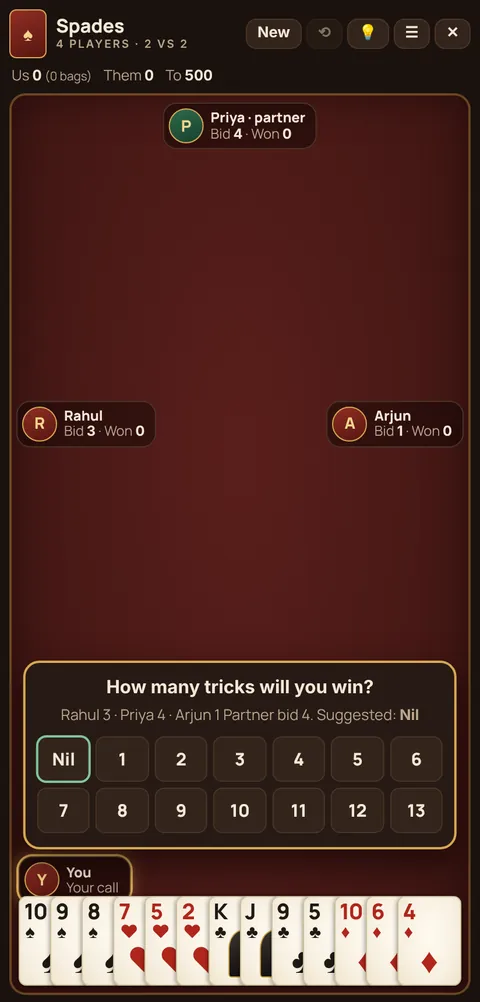
Bidding
- Count Aces and protected Kings in side suits, and your high spades. Spades beyond the third are usually winners. (See how to bid in Spades for the full method.)
- Listen to your partner's bid. A big bid from them means you don't need to stretch.
- Bid what you can make; being set costs 10 per trick of your contract.
Nil
When to bid Nil
With no Aces, no high spades (nothing above about 10♠), few spades, and plenty of low cards. Long side suits with high cards are dangerous for Nil.
Covering your partner's Nil
If your partner bid Nil, your job changes: play high cards on tricks your partner might win, lead suits they're out of, and win tricks even if you don't need them. Cheettukali's partner does this for you if you bid Nil.
Bags
Every trick over your contract is a bag: +1 point now, but 10 of them cost 100. Once your team has made its contract, duck: play cards that lose the trick, especially low cards under the winning card.
Setting the other team
If the opponents bid high, every trick you take from them matters more than bags. Hold your Aces and high spades for their key tricks.
Play with your partner
- Don't overtake a trick your partner is already winning with a sure card.
- Lead suits your partner is void in, so they can trump.
- Second player usually plays low; third player plays high.
🃏 Try it now: play Spades free in your browser, no download, no money.
FAQ
When should you bid Nil in Spades?
When you have no Aces, no high spades, few spades and lots of low cards. Your partner then has to protect you.
How do you avoid bags in Spades?
After your contract is made, play to lose tricks: play under the winning card and save your high cards for setting the other team.